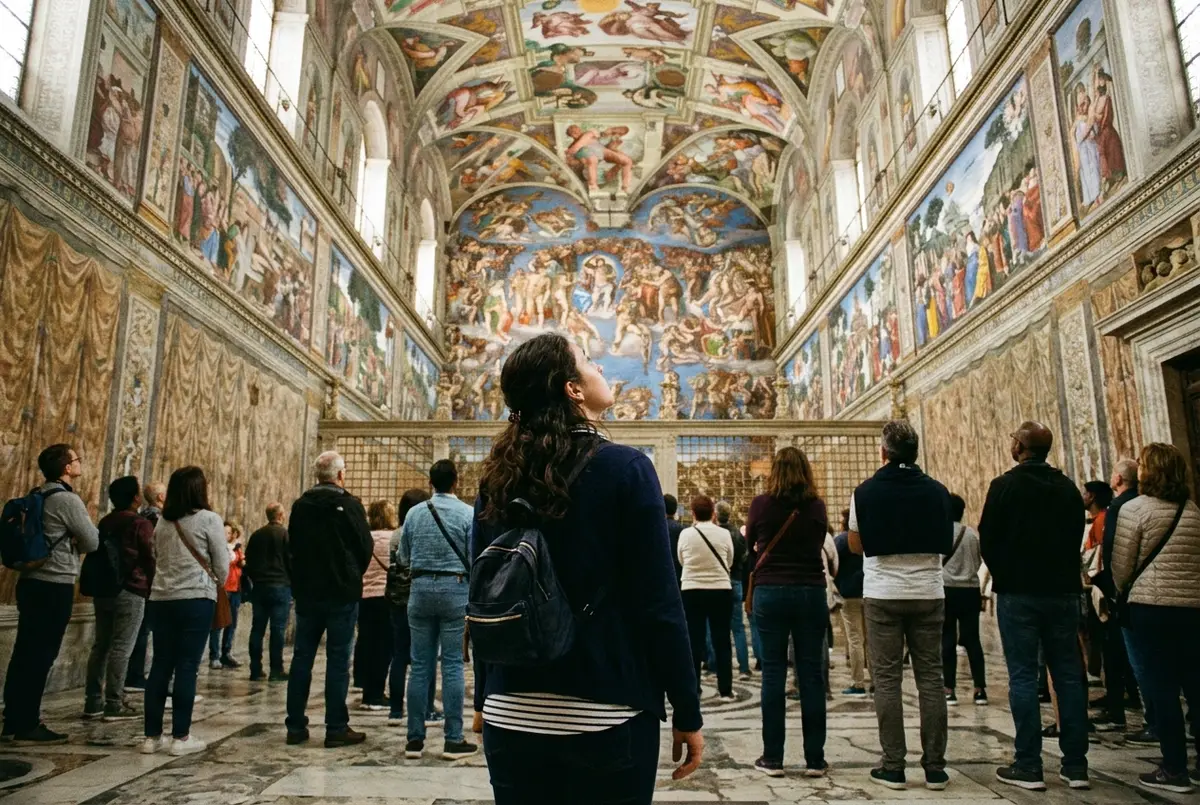
To visit Sistine Chapel properly, the first thing I’d sort out isn’t a ticket. It’s a basic piece of geography that trips up more first-time visitors than anything else on this page: the Sistine Chapel is one room, inside the Vatican Museums, physically next door to but administratively separate from St. Peter’s Basilica. Get that straight before you book anything, and the rest of your planning gets noticeably easier.
I’ve seen this confusion play out the same way again and again. Someone buys a St. Peter’s Basilica ticket expecting the ceiling, or shows up at the Basilica entrance looking for Michelangelo’s frescoes, only to learn they’re in the wrong line entirely. Here’s what I’d actually do: treat the Sistine Chapel, the Vatican Museums, and St. Peter’s Basilica as three related but distinct things, each with its own rules, and let that distinction drive every decision below.
Is the Sistine Chapel in the Vatican Museum?
Yes. The Sistine Chapel sits at the very end of the Vatican Museums’ one-way route, reached only after walking through dozens of galleries including the Gallery of Maps and the Raphael Rooms. There’s no separate ticket for the chapel alone; any standard Vatican Museums admission gets you there eventually, since the museum’s layout funnels every visitor toward it as the climactic final stop.
I think this is actually good news for planning. You don’t need to research a separate booking system for the chapel itself. Whatever Vatican Museums ticket you choose already includes it.
Is the Sistine Chapel in St. Peter’s Basilica?
No, and this is the mix-up I’d flag most carefully. The Sistine Chapel and St. Peter’s Basilica are two separate buildings, run under separate administration, connected only by proximity within Vatican City. A ticket to one does not include the other by default. I’d never assume a Basilica ticket gets you the ceiling, or that a Sistine Chapel ticket walks you into the Basilica automatically, because neither assumption holds up.
Some guided tours bundle both into a single booking with a guide walking you between them, which is genuinely the easiest way to see both without worrying about separate queues. But that’s a choice you make at booking, not something that happens by default.
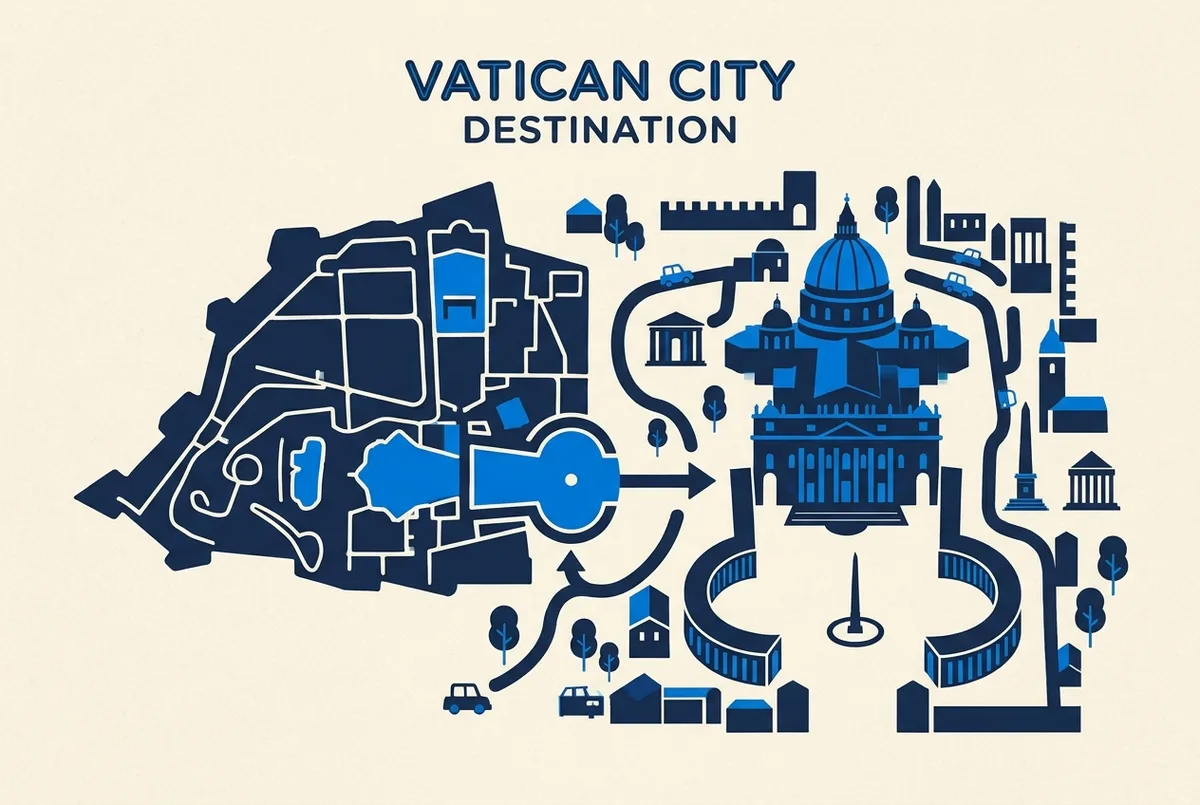
So what’s the actual relationship between St. Peter’s Basilica and the Sistine Chapel?
They’re neighbors inside the same walled city, both worth seeing, and commonly visited on the same day, but functionally unrelated when it comes to tickets and access. My honest read is that most readers want both, which is exactly why the combo tours exist and sell well. If you’re one of them, I’d book a tour that explicitly includes Basilica access rather than hoping to walk in free afterward, since the Basilica’s own security line can run long on a busy afternoon and there’s no guarantee of a quick entry.
What does a Vatican Museums ticket actually get you?
Timed entry to the museum complex, a one-way walking route through its galleries, and access to the Sistine Chapel at the route’s end. It does not include a guide unless you specifically choose a guided option, and it does not include St. Peter’s Basilica. I’d think of it as buying access to the building, with everything beyond that (narration, Basilica add-ons, skip-the-line upgrades) as separate decisions layered on top.
How much time should I actually set aside?
More than most people budget, in my experience looking at how the route is laid out. A self-guided visit typically runs 2 to 3 hours door to door, and that’s before security. I wouldn’t try to squeeze this into a spare hour between other plans; the one-way route doesn’t let you skip ahead, so rushing just means walking faster past things you came to see. Our Vatican Museums tour duration guide breaks down exactly where that time goes, room by room, if you want to plan a tighter schedule.
What should I wear to visit the Sistine Chapel?
Shoulders and knees covered, for every visitor, regardless of the season. This isn’t a soft suggestion; security enforces it at the checkpoint, and I’ve seen travelers turned away in August heat over a sleeveless top they assumed would be fine. I’d pack a light scarf or cover-up even if you’re fairly confident your outfit passes, just in case. Our Sistine Chapel dress code guide has the full do-and-don’t list, plus practical fixes rather than just rules.
When should I go if I want to actually see the ceiling clearly?
Early. The gallery crowds build steadily from mid-morning, and by early afternoon the Sistine Chapel itself can feel more like a crowded platform than a quiet room for reflection. I’d book the first available slot of the day every time I had the choice, since that single decision does more for your experience than almost anything else on this page. Our best time to visit guide ranks the actual crowd patterns by time slot and season, which I’d read before locking in a date.
Should I plan to visit St. Peter’s Basilica the same day?
If you want both, yes, and I’d plan the order deliberately rather than leave it loose. Walk to the Basilica right after exiting the Sistine Chapel if you’re going without a guide, since the security line there grows fastest as the day wears on. If a papal Mass or the Wednesday general audience falls during your trip, the Basilica’s hours shift, sometimes significantly, so I’d check the current schedule before counting on afternoon access. Our St. Peter’s Basilica hours and Mass times guide covers exactly how that works, flagged evergreen so you can confirm the current schedule yourself.
What is the Holy Door, and will I see it on my visit?
Only during a Jubilee year, and only if you know where to look. St. Peter’s Basilica has a Holy Door that stays sealed most of the time and opens for the duration of a Jubilee, a tradition most first-time visitors have never heard of and easily walk past without noticing. I think it’s worth knowing about before you go, if only so you don’t mistake it for the main entrance or miss it entirely when it is open. Our Holy Door and Jubilee Door guide explains the tradition and exactly where to find it on the facade.
Do I need a guide to actually understand what I’m looking at?
Not strictly, but I’d weigh it honestly. A guide fills in context, the Creation of Adam’s restoration history, the Last Judgment’s placement, the Raphael Rooms along the way, that a self-guided visitor either researches beforehand or skips. I’d book a guide on a first trip to Rome if narration matters more to you than saving money, and skip it if you already have a rough sense of what you want to see and would rather move at your own pace. Neither choice is wrong; it genuinely comes down to what you value more on the day.
How do I actually book, and what should I buy first?
Here’s where I’d stop overthinking it. If you’re still deciding, start with the skip-the-line Vatican Museums and Sistine Chapel ticket, from $36.33, which covers everything described above without locking you into a guide’s pace or a higher price tier you may not need. It’s the single most common entry point I’d point a first-time reader toward, and it’s cheap enough that upgrading later, if you decide you want more, isn’t a sunk cost.
Since every ticket and guided tour sold for the Sistine Chapel differs mainly in how much time it saves you at security and how much narration comes with it, it’s worth weighing every entry ticket and guided tour against what each one actually includes before you pick a price tier.
Vatican Museum Tickets: the official channel versus a vetted booking
If your real question is where to actually click “buy,” that’s a separate decision from everything above. The official Musei Vaticani site is the cheapest route when it works, but it offers no live support if something goes wrong with your booking. A vetted third-party option usually costs a little more and comes with free cancellation and a real support line. Our Vatican museum tickets guide walks through that trade-off in full, including the exact booking steps for both routes.
What if I specifically want St. Peter’s Basilica guaranteed, not just hoped for?
Then you’re looking at a different product category: a ticket or tour that explicitly bundles Basilica access, rather than one that leaves it to chance. Basilica entry itself is free, but the good skip-the-line and dome-climb options around it are paid, and I’d rather pay a little more for a guaranteed slot than gamble on an open-ended walk-up line later in the day. Our St. Peter’s Basilica tickets guide breaks down exactly what’s sold separately and what a combo booking actually gets you.
What’s the honest bottom line for a first-time visitor?
Sort out the geography first: one room (the Sistine Chapel), inside one complex (the Vatican Museums), next door to a separate building (St. Peter’s Basilica). Then book the earliest slot you can get, dress with shoulders and knees covered, and decide once, clearly, whether you want a guide or not. I think almost every bad Vatican experience I’ve read about traces back to skipping one of those three steps, not to bad luck on the day.
Frequently asked questions
Is the Sistine Chapel part of the Vatican Museums or a separate site?
It’s part of the Vatican Museums, located at the very end of the one-way gallery route. Any standard Vatican Museums ticket includes entry to it.
Do I need a separate ticket for St. Peter’s Basilica?
Basilica entry itself is free and needs no ticket, though it has its own security queue. Paid add-ons like the dome climb or a guided interior tour are booked separately from any Vatican Museums ticket.
Can I visit the Sistine Chapel and St. Peter’s Basilica on the same ticket?
Only if you specifically choose a combo product that includes both. Standard entrance tickets to the Museums stop at the Sistine Chapel and don’t carry over into the Basilica.
How long should I plan for a full Sistine Chapel and Vatican Museums visit?
Budget 2 to 3 hours for a self-guided visit, plus time for security. Add another hour if you’re also visiting St. Peter’s Basilica the same day.
What’s the single biggest mistake first-time visitors make?
Assuming the Sistine Chapel, the Vatican Museums, and St. Peter’s Basilica are either all the same thing or all separately ticketed. They’re neither; understanding the actual relationship between them is most of what makes a Vatican visit go smoothly.
My bottom line: once the geography clicks, the rest of planning a Sistine Chapel visit is mostly logistics, and the pages linked above cover each piece in more depth than I can fit here. Start with the earliest ticket slot you can get, dress appropriately, and decide on a guide before you second-guess yourself at the entrance.
According to the Sistine Chapel’s history on Wikipedia, the chapel was completed under Pope Sixtus IV in the early 1480s, with Michelangelo’s ceiling added decades later, a history worth knowing before you stand under it.
see every Sistine Chapel ticket and tour on this site →